Institutional Risk Management at the Lab is overseen by an executive-level Risk Management Committee, chaired by the Chief Operating Officer. The CAS Office manages the program and maintains the Institutional Risk Register.
Risk can be differentiated from “issue” by the fact that a risk, by definition, has not manifested yet – proving an opportunity to reduce the likelihood or impact through careful mitigation and management.
Implementing the Lab’s risk management process helps the Lab be proactive by managing or preventing risks that may impact its mission and its long-term sustainability. Effectively managing risks helps the Lab minimize potential losses and ensure stability through:
- Fostering good communication and collaboration;
- Enabling good management decisions;
- Promoting compliance and
- Maintaining a positive reputation
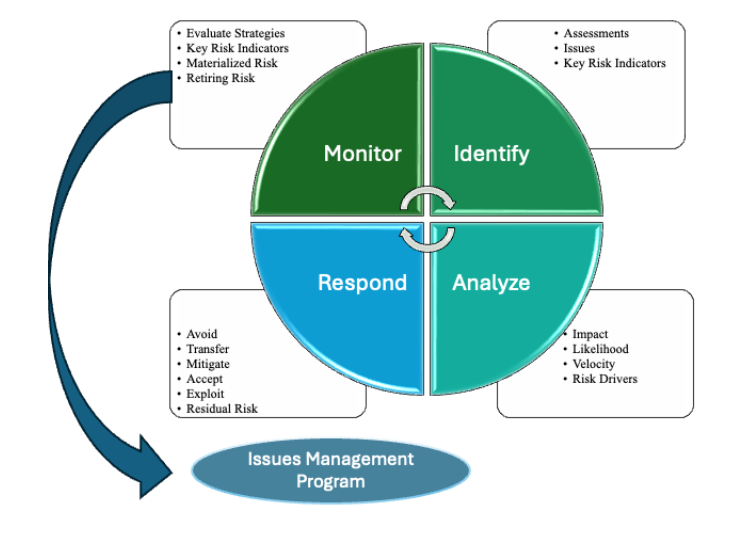
The Risk Management Description provides the framework to provide the University of California National Laboratory (UCNL) Management, Lawrence Berkeley National Laboratory (LBNL) Senior Management, and the Department of Energy (DOE) Berkeley Site Office (BSO) with an integrated view of the significant risks facing the Laboratory and to help assure that these risks are managed effectively. Laboratory risks are
documented in the Institutional Risk Register (Risk Register), the official repository of institutional risk data.